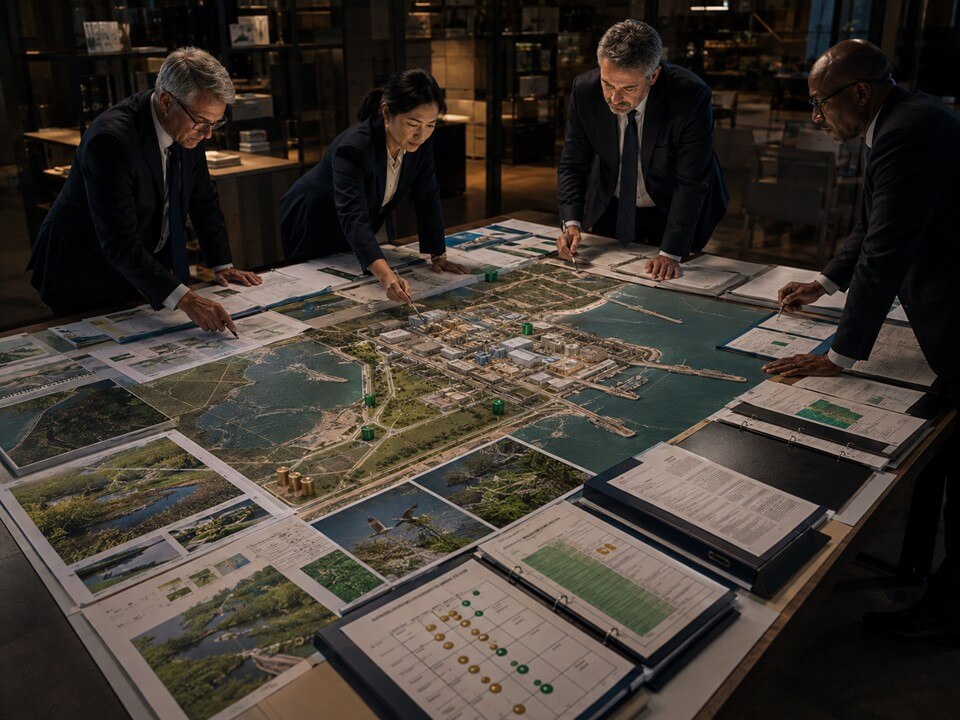
FEASIBILITY & FINANCIAL MODELING Test the Case Before Capital Tests It.

NEOX connects feasibility evidence to financial modeling so that scope, operations, commercial structures, costs, schedule, risk allocation, and funding assumptions are tested as one project case. For complex infrastructure, clean-energy, and sustainable-industrial projects, the objective is clear: establish what the evidence supports, quantify where value and resilience remain exposed, and define the decisions required before further capital is committed.

FROM EVIDENCE TO FEASIBILITY One Project Basis. Every Assumption Accountable.

INTEGRATED FEASIBILITY

A feasibility study is credible only when its technical, commercial, execution, regulatory, ESG, and financial cases remain consistent. NEOX tests these interfaces, coordinates relevant specialist inputs, traces material assumptions to supporting evidence, and identifies contradictions before they distort economics, obscure retained risks, or weaken the basis for a bankability assessment.

Project Basis & Technical Case

Establish whether scope, capacity, technology, feedstock or resources, site, utilities, infrastructure, logistics, and operating assumptions provide a coherent foundation for specialist validation, cost estimation, scheduling, and performance analysis.

Market & Commercial Case

Test whether demand, pricing, revenues, offtake, supply arrangements, counterparty capability, and contractual dependencies support the operating case and allocate material commercial risks on a credible basis.

Cost, Schedule & Execution Case

Reconcile CAPEX, OPEX, contingencies, development expenditure, procurement, construction, commissioning, and ramp-up assumptions so that their timing, funding consequences, and implementation constraints are reflected consistently.

Approvals, ESG & Risk Case

Determine how land, permits, environmental and social requirements, certification, stakeholders, risk allocation, and unresolved evidence gaps could affect scope, cost, schedule, acceptance, or project advancement.

“Development value is created by resolving critical interfaces before they become cost, schedule, or financing failures.”

FROM ASSUMPTIONS TO DECISIONS Translate Project Evidence Into Decision-Grade Economics.

DECISION-GRADE FINANCIAL MODELING

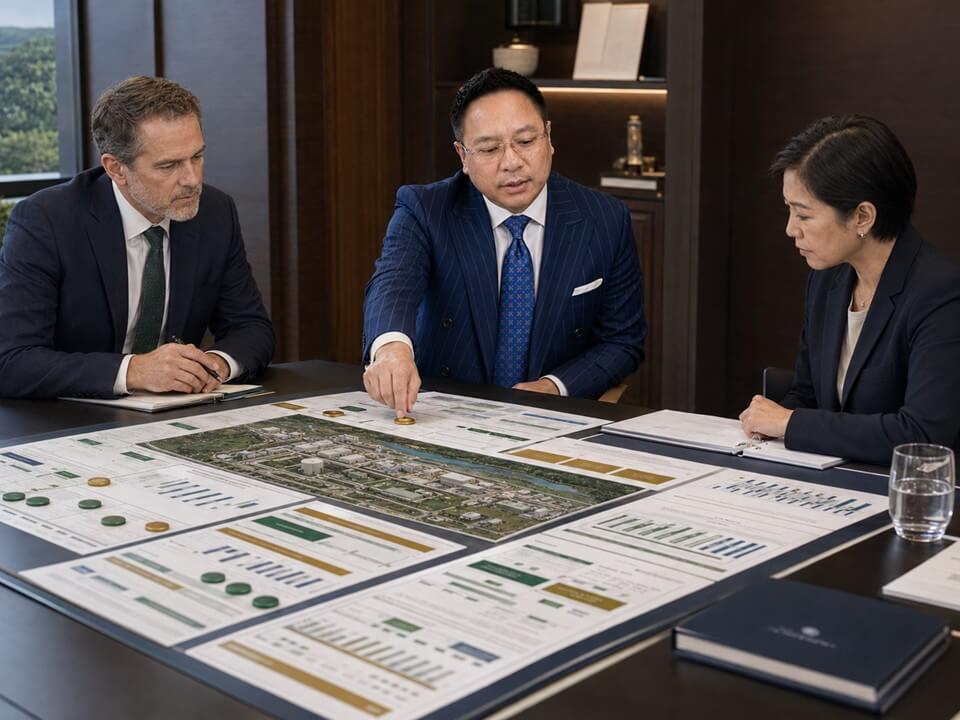
NEOX converts the project basis into a transparent, controlled financial model that shows how operating and commercial assumptions drive cash flow, capital requirements, debt capacity, returns, and downside exposure. Material outputs remain traceable to their sources, enabling sponsors to compare options, challenge risks, and make disciplined project-finance and investment-readiness decisions.

Integrated Model Architecture

Connect production or throughput, pricing, revenues, CAPEX, OPEX, taxes, working capital, cash flow, and funding assumptions within a structured model that remains transparent, consistent, controlled, and reviewable.

Economics & Value

Measure unit economics or LCOX, NPV, project IRR, equity IRR, and payback while distinguishing project-level performance, equity outcomes, financing effects, and the principal drivers of value.

Debt Capacity & Capital Structure

Test sources and uses, CFADS, debt sizing, repayment profiles, DSCR, LLCR, and covenant headroom to identify financing constraints and indicative debt capacity—not lender appetite or commitment.

Scenarios & Decision Support

Apply targeted sensitivities, coherent downside scenarios, break-even analysis, and option comparisons to quantify risk consequences, expose fragile assumptions, and define the conditions required for advancement.

START WITH THE EVIDENCE Establish What Your Project Can Support.

Engage NEOX to determine what the available evidence supports, how material assumptions translate into financial outcomes, and what must be resolved before the next development, investment, or financing decision. The review focuses on the issues most consequential to value, risk, capital requirements, and readiness. Initial discussions are confidential and exploratory. Any formal engagement is subject to an agreed written mandate.

Any formal engagement is subject to an agreed written mandate.

error: