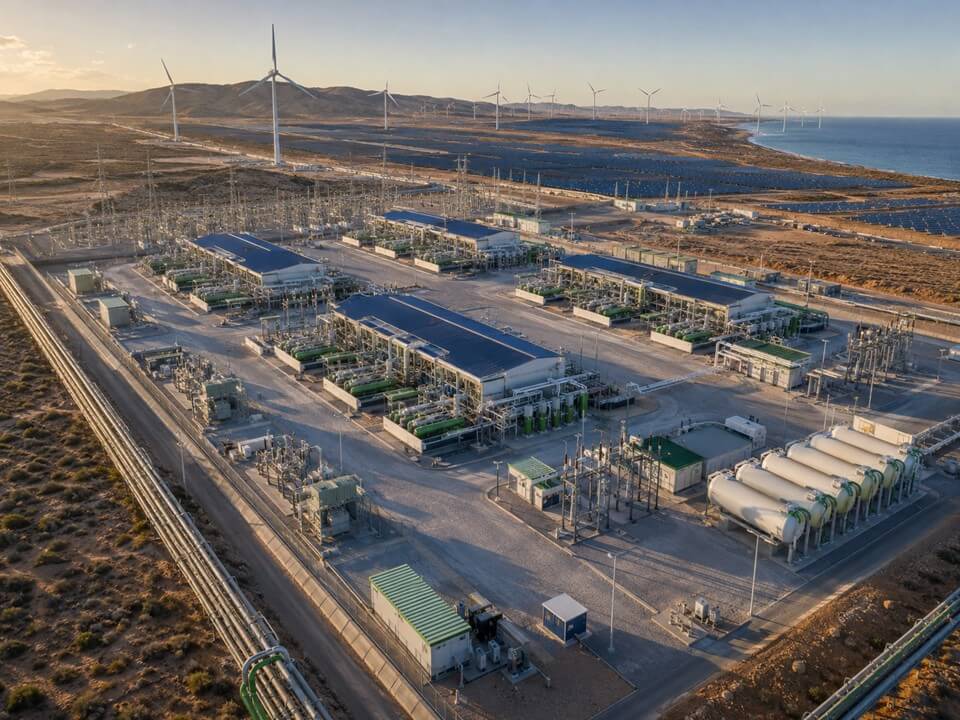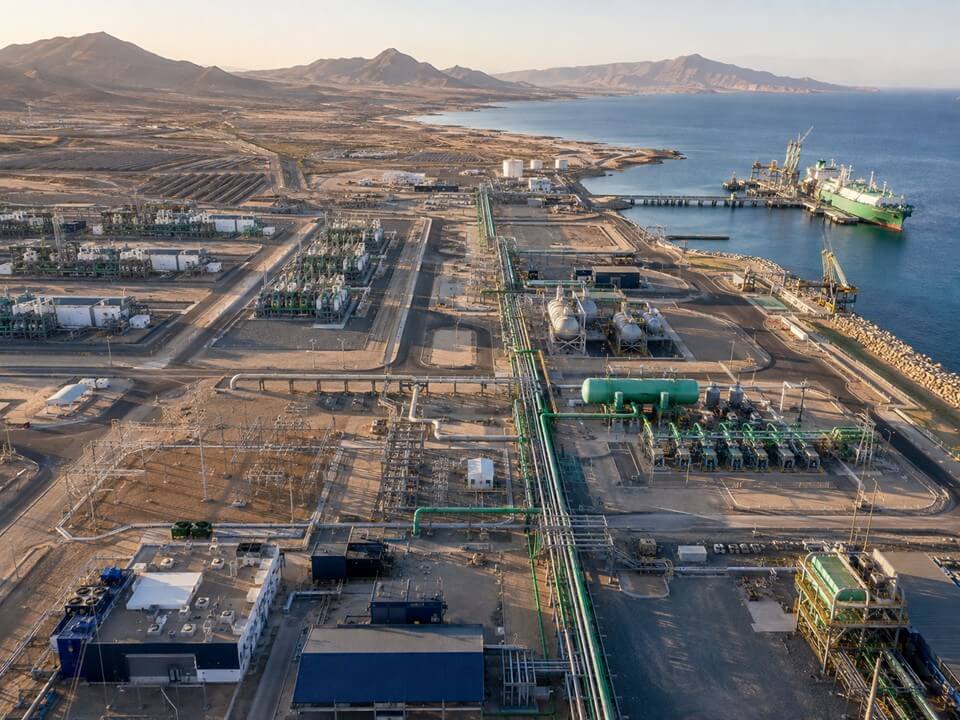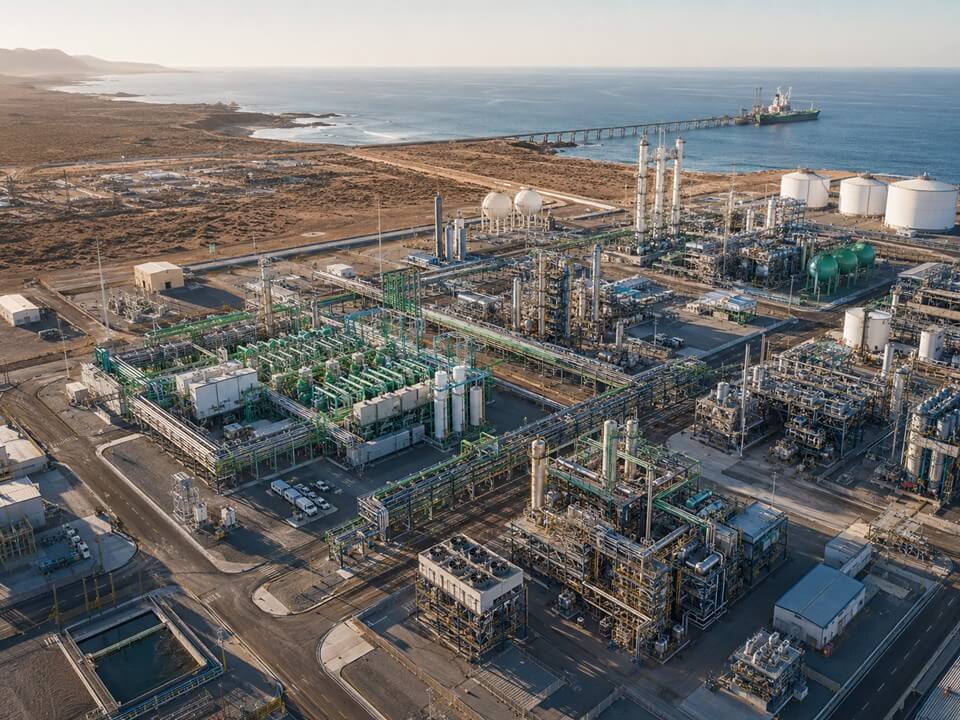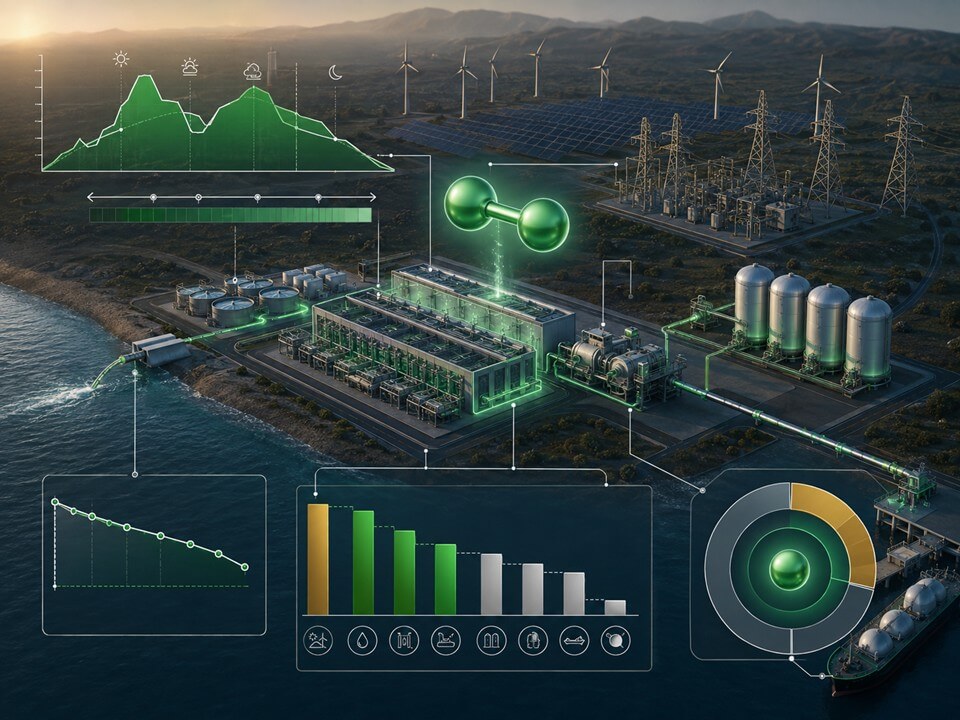
GREEN HYDROGEN PROJECT DEVELOPMENT Green Hydrogen Facilities Structured for Commercial and Financial Reality.

NEOX works alongside sponsors to develop credible green hydrogen projects—aligning power, water, technology, infrastructure, offtake, contracts, financial modeling, risk allocation, stakeholder requirements, and capital strategy into a single coordinated development program.

│ SENIOR-LED co-development across feasibility, project economics, commercial structuring, stakeholder alignment, investor relations, due diligence, and transaction preparation.
WHY HYDROGEN PROJECTS STALL The Green Hydrogen Development Challenge

Production Capability Is Not Yet an Investable Project.

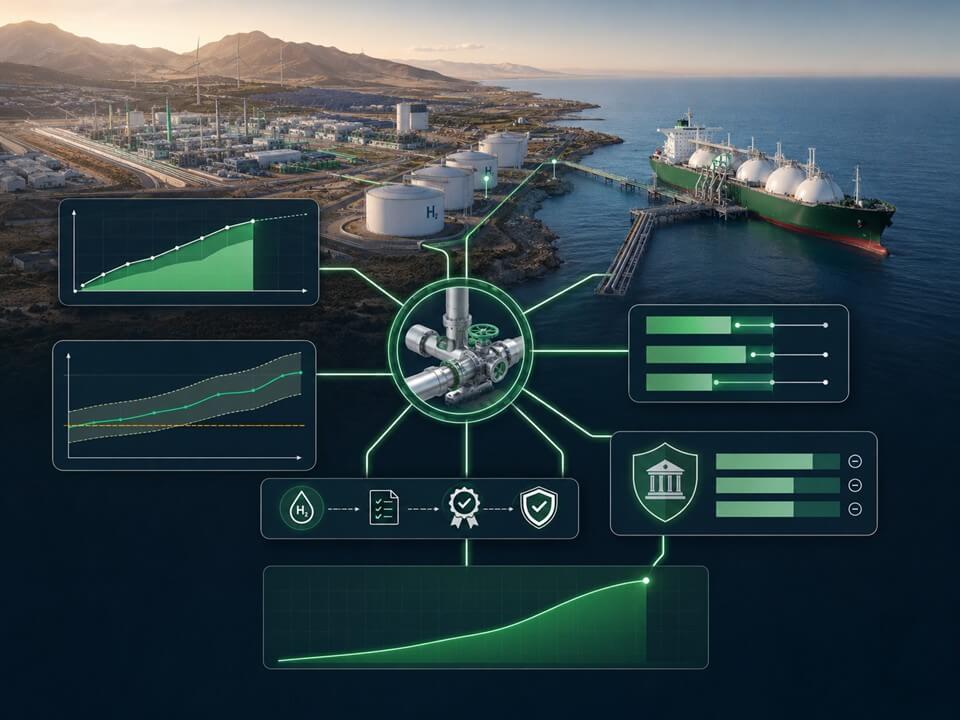
An electrolyzer and renewable power supply do not, by themselves, create a financeable project. Power, water, infrastructure, market, contracts, approvals, economics, and risk allocation must function as one coherent system.

Power and Production Economics

Power costs and generation profiles shape electrolyzer utilization and hydrogen costs. Efficiency, availability, degradation, curtailment, and replacement assumptions must support a defensible production case.

Infrastructure and Project Interfaces

Water treatment, grid connections, utilities, storage, compression, pipelines, transport, and ports must align with plant capacity, delivery schedule, capital cost, and operating requirements.

Market and Contractual Certainty

Product specifications, certification, price, volume, delivery obligations, credit support, and offtaker strength must convert prospective demand into a credible revenue framework.

Risk and Capital Readiness

Development maturity, sponsor capability, execution strategy, risk allocation, downside resilience, and capital structure determine whether investors and lenders can evaluate the opportunity.

“Green hydrogen becomes investable only when power, water, infrastructure, offtake, certification, and execution operate as one system.”

SPONSOR-SIDE DEVELOPMENT INTEGRATION One Development Program. One Coherent Investment Case.

NEOX as Project Co-Developer

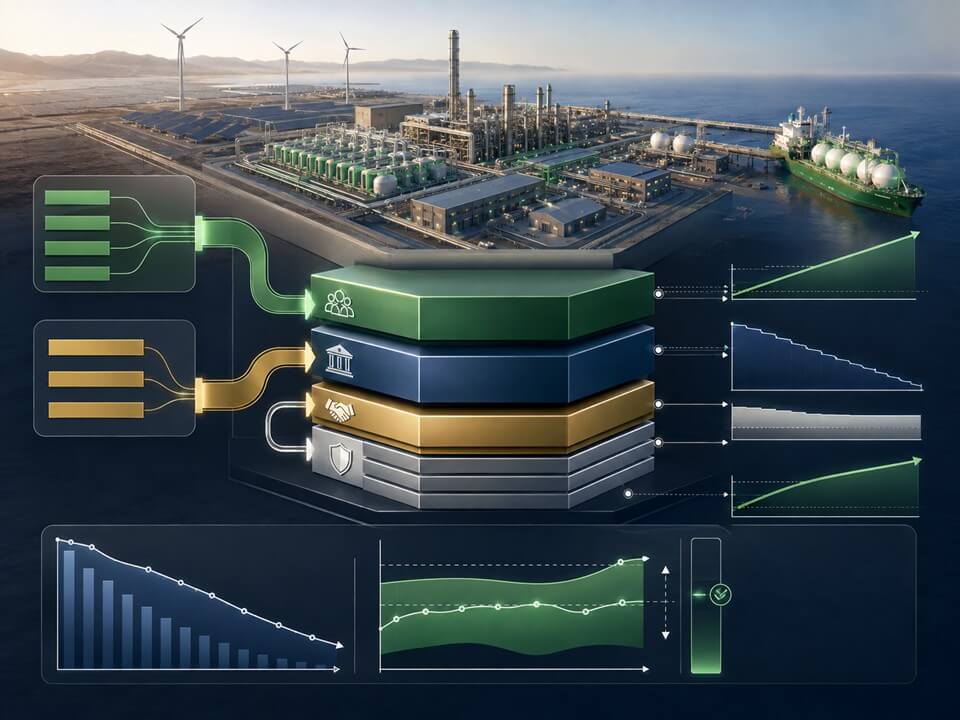
Green hydrogen projects involve multiple specialists, counterparties, and interdependent decisions. NEOX works alongside the sponsor to convert fragmented studies, assumptions, and negotiations into a coordinated development and transaction program.

Direct the Program

Define priorities, responsibilities, budgets, schedules, dependencies, decision points, and stage-gate requirements.

Integrate the Evidence

Connect technical, market, regulatory, commercial, execution, and financial inputs into one consistent project case.

Control Assumptions

Trace project decisions through cost, schedule, contracts, risk, cash flow, financing capacity, and returns.

Prepare the Transaction

Develop decision materials, organize diligence, prepare negotiation positions, and support capital-provider engagement.

Scope Boundary: Qualified specialists remain responsible for licensed engineering, legal, environmental, tax, and certification work. NEOX coordinates and integrates their inputs within the wider project strategy.

“Hydrogen configuration should follow demand, delivery, infrastructure, and certification—when not a predetermined technology or scale.”

PROJECT APPLICATIONS Development Support Across the Hydrogen Value Chain.

Green Hydrogen Project Configurations

NEOX supports green hydrogen opportunities with different production models, infrastructure requirements, customer profiles, and routes to market. Each configuration demands a distinct development thesis, commercial structure, risk framework, and capital strategy.

Industrial Decarbonization Facilities

On-site or near-site production serving refineries, chemicals, fertilizers, steel, mobility, and other industrial users. Development focuses on reliable integration with the host facility, product specifications, utility interfaces, operating requirements, replacement of incumbent hydrogen, and long-term commercial commitments.

Large-Scale Renewable Hydrogen Projects

Standalone or integrated facilities supplied by dedicated solar, wind, hybrid renewable generation, grid power, or an optimized combination. Development must align resource quality, electrolyzer utilization, storage requirements, infrastructure availability, delivery profile, certification, market access, and phased capacity expansion.

Hydrogen Hubs and Export Platforms

Multi-user developments connected to industrial zones, shared utilities, pipelines, storage terminals, ports, and export logistics. These projects require coordinated infrastructure planning, anchor demand, access arrangements, allocation of common costs, multi-party governance, and a credible path to market aggregation.

Hydrogen-Derivative Projects

Green hydrogen integrated into ammonia, methanol, e-fuels, sustainable aviation fuel, and other low-carbon industrial products. Development must test conversion efficiency, feedstock availability, derivative-plant interfaces, product certification, logistics, export requirements, offtake strategy, and the economics of the complete value chain.

“Hydrogen capacity has value only when delivered-molecule economics produce resilient cash flow and debt capacity.”

GREEN HYDROGEN FINANCIAL MODELING The Model Must Explain the Molecule—and the Investment.

Financial Modeling as the Commercial Control Center

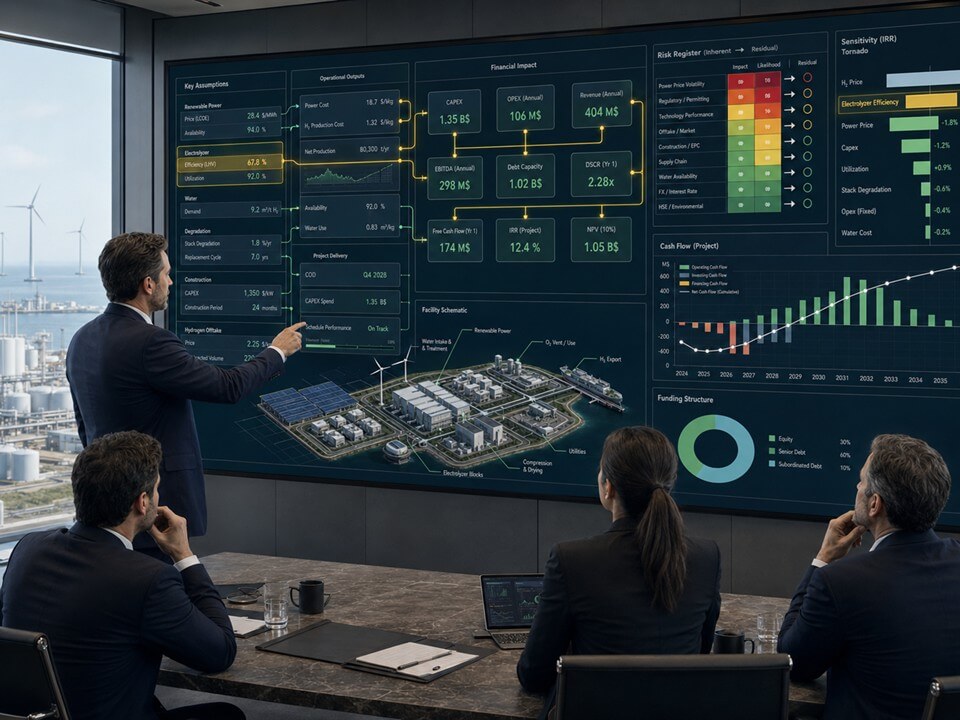
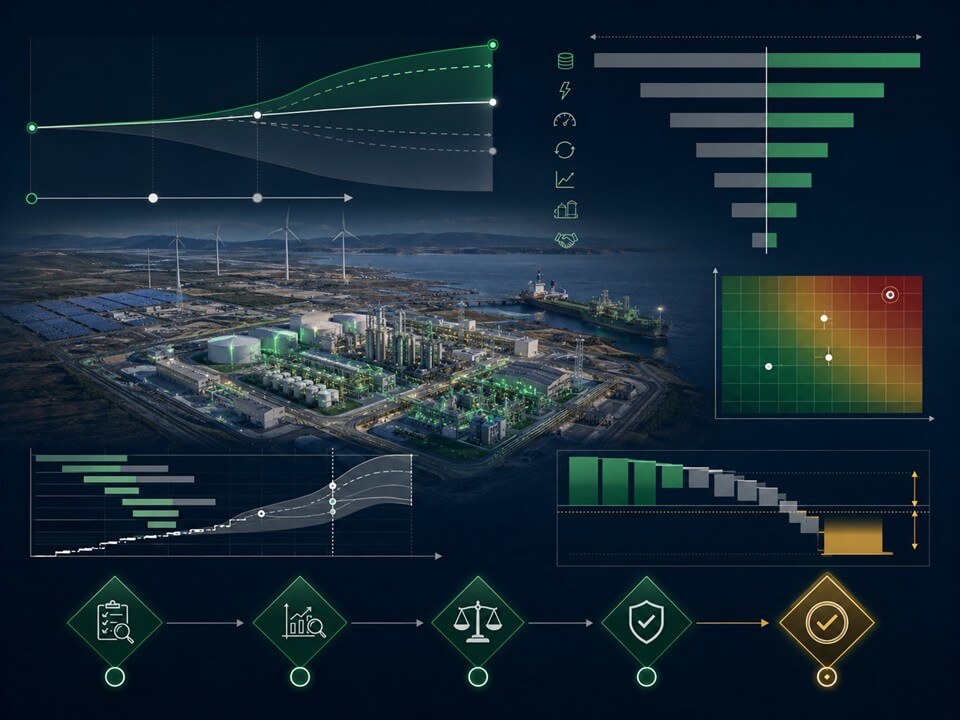
In green hydrogen project development, the financial model should do more than calculate returns. Green hydrogen financial modeling should establish a common quantitative language across engineering, operations, contracting, offtake, risk allocation, and financing. For hydrogen project finance, a change in a technical or commercial assumption must be traceable through production, cost, cash flow, debt capacity, and investor returns.

Molecule Economics

Determine how renewable-power cost and profile, capacity factor, electrolyzer efficiency and utilization, water, degradation, replacement, operating cost, storage, compression, transport, logistics, and scale combine to determine hydrogen production cost and the levelized cost of the delivered molecule.

Commercial Viability

Test product specifications, output, ramp-up, availability, pricing, indexation, volume commitments, take-or-pay provisions, certification value, delivery obligations, offtaker credit strength, and remedies to determine whether the revenue framework can withstand operational and market variability.

Capital Structure and Returns

Evaluate total funding requirements, development and construction sources and uses, sponsor contributions, debt capacity, financing costs, repayment profile, reserves, project returns, equity returns, cover ratios, covenant headroom, and the resilience of the proposed financing structure.

Risk and Decision Analysis

Quantify the effect of schedule delay, capital-cost overruns, higher power prices, lower utilization, efficiency losses, reduced production, slower ramp-up, operating underperformance, offtake shortfalls, refinancing assumptions, and other downside conditions on viability and capital requirements.

│ For NEOX, the financial model tests technical assumptions, commercial commitments, risk allocation, and capital expectations against one another—and where weak points must become visible before capital providers expose them.

“Hydrogen economics must expose weak power, utilization, offtake, and execution assumptions before the project advances.”

The NEOX Method Applied to Green Hydrogen A DISCIPLINED DEVELOPMENT PATHWAY

The NEOX Method applies a four-stage pathway to project co-development. Each stage is calibrated to the project’s maturity and designed to resolve the issues that must be addressed before the next material commitment of time, development capital, or transaction resources.

01 — Assess

Review the project fundamentals, sponsor objectives, existing studies, assumptions, models, agreements, development history, and market logic. Identify material evidence gaps, test preliminary economics, distinguish critical issues from secondary work, and define the priority development program.

02 — Structure

Define the preferred project configuration and establish the commercial, contractual, stakeholder, risk, financial, and capital framework. Align key interfaces, prepare the financial model, allocate material risks, clarify decision rights, and establish the proposed transaction pathway.

03. Prepare

Complete or coordinate the required feasibility work, strengthen the business and investment case, prepare management and transaction materials, organize the data room, resolve diligence gaps, and equip the sponsor for disciplined engagement with counterparties and capital providers.

04 . Engage

Approach qualified investors, lenders, and strategic partners; manage structured investor relations; coordinate presentations, meetings, and information requests; support due diligence; assess proposals and term sheets; and assist negotiations toward agreed development, investment, and financing milestones.

“Credible hydrogen financing begins after material development gaps are resolved—not when investor outreach starts.”

ADVANCE A CREDIBLE HYDROGEN OPPORTUNITY

Develop the Project Capital Can Evaluate.

Identify the gaps before investors and lenders do.

NEOX can assess the project’s maturity, identify the gaps most likely to constrain development or financing, and define a practical development-to-capital pathway.

error: